

A quick note before we begin:
My ebook STOIC CONFIDENCE has been received incredibly well since its release. I’ve had many readers message me to say that it helped them rethink their relationship with fear, self-doubt, and confidence, and hearing that has meant a lot to me.
If you’d like to read it, the full ebook is included with every Annual and Patron subscription, along with access to the complete Stoic Wisdoms archive.
Somewhere past the middle of a bad day, the day can stop being a day and start feeling like evidence about your life.
The tiredness that belonged to this afternoon begins to say something about your career. One rejection starts shaping what you expect from the future. An evening of loneliness reaches much further than the evening itself. Nothing necessarily changed in the facts. We simply began drawing much larger conclusions from them.
You can sometimes hear that shift in the language we use.
Today was difficult becomes everything has been difficult lately.
I feel lost becomes I have no idea what I am doing with my life.
This did not work becomes nothing I try ever works.
At first we stay close to what we actually know. Then we make claims about months, years, sometimes an entire future. Words like always, never, everything, and nothing allow a judgment formed in one moment to speak for far more of our life than it can really account for.
This is one reason I like the image of low tide.
If you had never seen the sea before and arrived at the shore after the water had pulled back, much of what you observed would be true. The boats really would be sitting lower. The mud really would be exposed. The water really would be far from where it had been.
Your mistake would begin when you tried to understand the whole ocean from that single moment.
Nobody familiar with the coast needs to deny what is in front of them. They simply know that what they are seeing now is one state of something larger.
We have much less difficulty remembering that about the sea than about ourselves.
A bad state changes what comes easily to mind. When you are disappointed, old disappointments are easier to remember. When you feel behind, every delay and unfinished ambition suddenly seems important. When you are lonely, the mind rarely gives equal attention to all the periods in which you felt loved, connected, and understood.
The conclusion can therefore feel remarkably well supported. You are not merely miserable. You can point to reasons.
That is where I think the Stoics become useful.
Epictetus made a distinction between an impression and our decision to accept it as true.
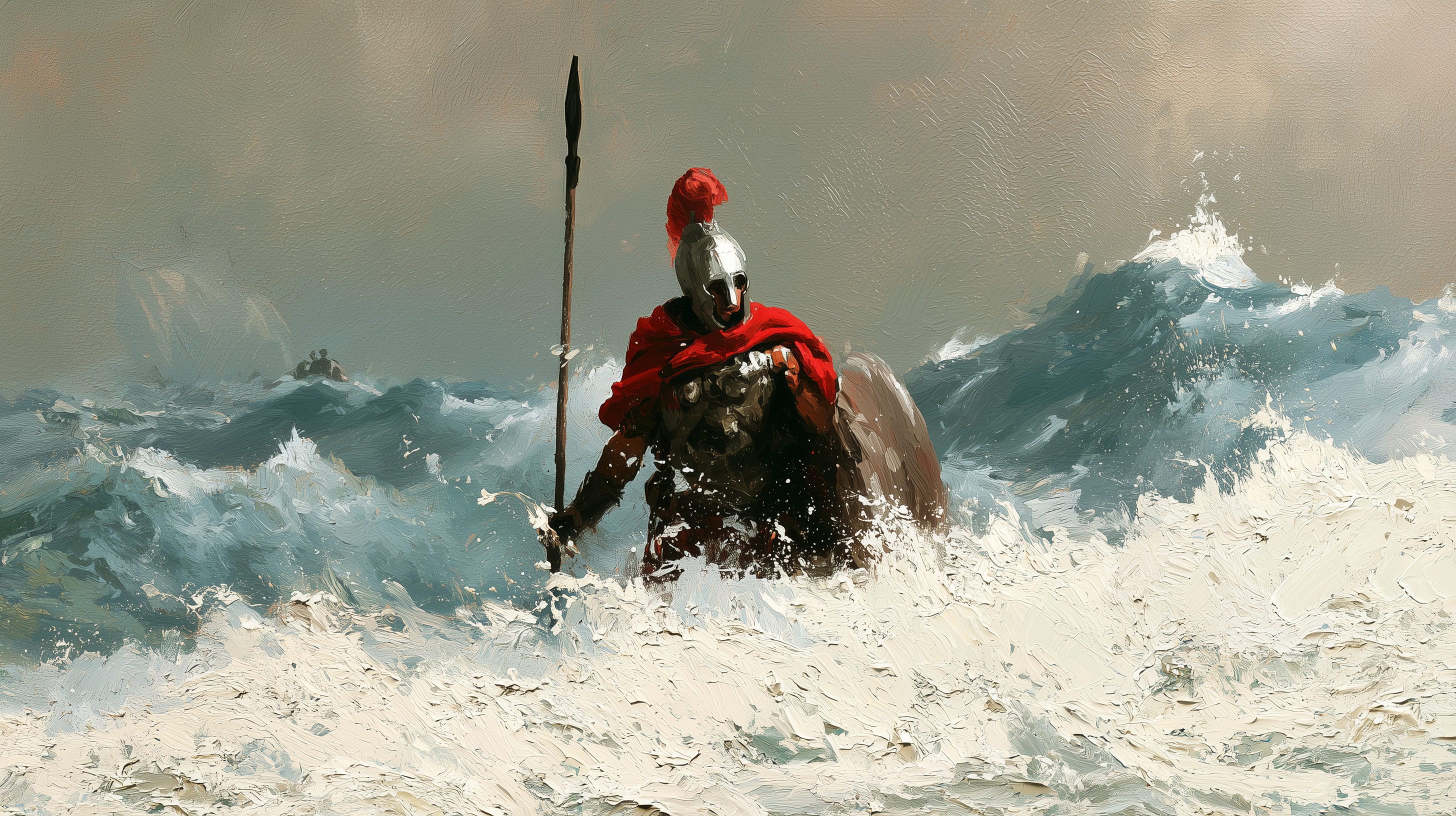
Over 350,000 people now read Stoic Wisdoms. If you haven’t upgraded yet, you can unlock this full post and all 100+ premium posts. Go annual or patron to get my ebook STOIC CONFIDENCE.
An impression appears quickly and often feels convincing before we have had much chance to examine it. His advice was to slow that process down and ask what has actually happened before agreeing with everything the first impression seems to suggest.